![[personal profile]](https://www.dreamwidth.org/img/silk/identity/user.png)
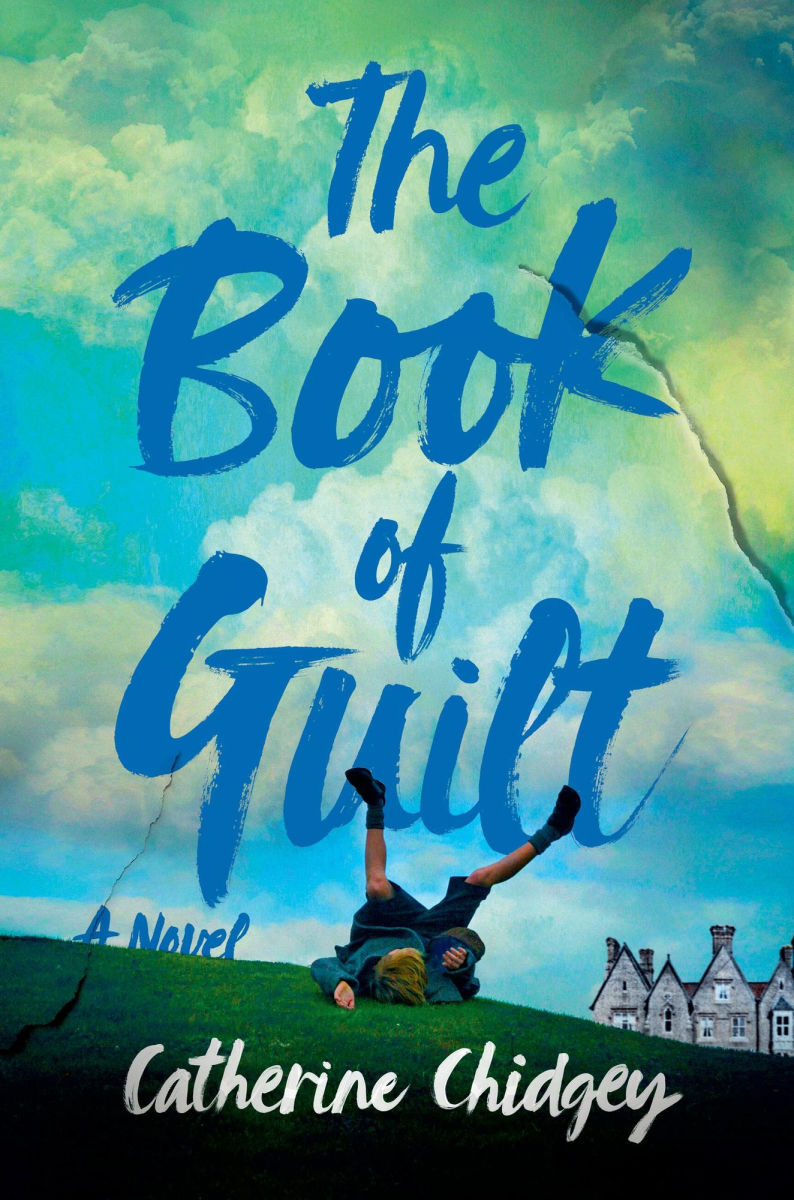
This is a difficult book to review as almost all of the plot is technically spoilery, but you can also figure out a lot of it from about page three. I'll synopsize the first two chapters here. We follow two storylines, both set in an alternate England where Hitler was assassinated in 1943 and England made peace with Germany.
In one storyline, a young girl named Nancy lives an isolated life with her parents. In the other, which gets much more page time, three identical young boys are raised by three "mothers," in a home in extremely weird circumstances. They rarely see the outside world, they're often sick and take medicine, their dreams are meticulously recorded by the "mothers," and all their schooling comes from a set of weird encyclopedias that supposedly contain all the knowledge in the world, which are also the only books they have access to. There used to be 40 boys, but when they recover from their mysterious illness, they get to go to Margate, a wonderful vacationland, forever.
I'm sure you can figure out the general outline of what's going on with the boys, at least, just from this. What's up with the girl doesn't become clear for a while.
As I guessed from page three, when it's first mentioned that the boys are identical, they are clones. There are also girls' homes for clones. Biology advanced earlier in this world, and the clones are experiments created by Nazis who immigrated to England. They are being dosed with experimental drugs that make them sick. We don't learn at this point what Margate really is, but duh. The triplets have recurrent dreams of a girl with long black hair, sometimes peaceful and sometimes violent.
The clone triplets we're following are clones of a serial child murderer. Their dreams of the girl with long black hair are of Nancy, who is the illicit secret clone of one of the girls he murdered, being raised again by her parents, who are trying to force her to be the exact replica of Original Nancy. Meanwhile, Nancy has dreams and memories of being murdered. This is because clones have genetic memory.
I HATE the trope that memories are passed on in DNA, especially when it involves serial killers. It's dumb when it's "heart transplant recipient starts seeing flashes of murders, learns that heart belonged to serial killer," and it's dumb when it's "clones of a serial killer dream of his victims." It stands out here especially because the tone of the book is deadly serious literary fiction, and this trope is pure pulp trash.
When Nancy's parents learn that there are clones of her murderer, they get their hands on one of them and try to kill him in the same way Nancy was killed. Nancy, horrified, manages to alert the police before he's killed, but not before they cut out his tongue! The general public doesn't care because he's "not a real boy."
A minister who gets to know some of the clones manages to get them transferred to a more normal orphanage, and eventually gets them civil rights though they're still an oppressed minority. Nancy and Vincent, the clone boy narrator who sent his non-sociopath rapist brother to Nancy's parents to save the rapist brother he liked better, get married. Margate, a real town with an amusement park, creates a museum about the clones. "Sent to Margate," of course, meant getting gassed.
The clone's dreams are recorded because the Nazi scientist who created and maintains the project wants to see if memories and evil are passed on genetically. The answer is, objectively within the book, yes for the first and sometimes for the second. Of the three boy clones, one is basically fine, one ends up sacrificing one brother to murderers to save the one he likes better, and one is a violent, sociopathic rapist.
At the very end, there's one line saying that actually, the clones are less likely to be violent than the general population, but what we actually see is that one-third of the clones of serial killers turn out exactly like them. So while the book is making an argument about dehumanization and judging people wrongly, it's also accidentally saying that some of that judgment is objectively true.
This is at least the second adult dystopian novel I've read in which the bad society changes because a person high in the government meets a member of the oppressed class, realizes they're human after all, and fixes things. (The other is the final book in Jo Walton's Small Change trilogy, in which the Nazi-esque England is fixed when one of the characters meets the Queen of England. ). I'm not sure this has ever happened in real life. The YA dystopias in which society changes because of a general uprising are actually more historically plausible in a general sense.
This book was critically acclaimed - it was a Kirkus best book of 2025 - but I thought it had major flaws, which unfortunately I can only describe by spoiling the entire book. It's not at all an original idea, and I do think we're supposed to be ahead of the characters, but maybe not that much ahead. It also contained a trope which I hate very much and its thesis contradicted itself, but how, again, is under the end cut. It's a very serious book about very serious real life stuff, but that part really didn't work for me because of spoilers.
Lots of people loved it though. It would probably make an interesting paired reading with a certain very acclaimed spoilery book ( Never Let Me Go ), which I have not read as I have been spoiled for the entire story and it doesn't really sound like something I'd enjoy no matter how great it is. But I suspect that it's the better version of this book.
Content Notes (spoilery): Child abuse, child murder, Nazi Germany style experiments and gassing of children, rape of a child by another child, child torture.
From:
no subject
I hate the genetic memory trope (mechanism?!) but as someone who was instructed to cause the above trope IRL I hate it so much more. If I tried to read this book I might throw it across the room.
From:
no subject
That trope also assumes that at least some people highly placed in government literally don't know or understand that real people are being oppressed, as opposed to knowing and not caring. This is also something that, to my knowledge, has never been true since like at least the 1800s and maybe ever.
From:
no subject
From:
no subject
From:
no subject
From:
no subject
Word. So much word.
From:
no subject
From:
no subject
From:
no subject
From:
no subject
From:
no subject
I thought for sure the boys were going to be Hitler clones.
From:
no subject
From:
no subject
From:
no subject
From:
no subject
From:
no subject
From:
no subject
From:
no subject
From:
no subject
From:
no subject
From:
no subject
From:
no subject
From:
no subject
I liked Never Let Me Go more than I expected to, and I was already spoiled for the twist; it’s really strong on atmosphere.
From:
no subject
From:
no subject
From:
no subject
From:
no subject
From:
no subject
Every time I hear about a mainstream book like this I get utterly disgusted, because if they'd just read some of the SF stuff they despise so much, they'd know that none of these ideas are new in the least and that other people have already done a better job.
And then the critics fawn over the results and put it on lists and give it awards. FIE I SAY!
Yes, Cyteen and Never Let Me Go, and probably some others.
From:
no subject
From:
no subject
(Granted it's also a movie about hiding from dinos in a big mansion but still...)
Keeping children in some kind of facility where they are being observed at all times (the dream recording) and are kept from society and others is not considered horrible abuse in this book?
Can I just say that the cover is very weird? That kind of font and photo gives of the vibe of coming-of-age story not Nazi experiments.
From:
no subject
I agree, it's a bizarre cover.
From:
no subject
From:
no subject
The NZ cover is more apt, I think: it's a Margate poster on the front, with the same poster tattered and mostly torn away on the back.